Method
How it was run.
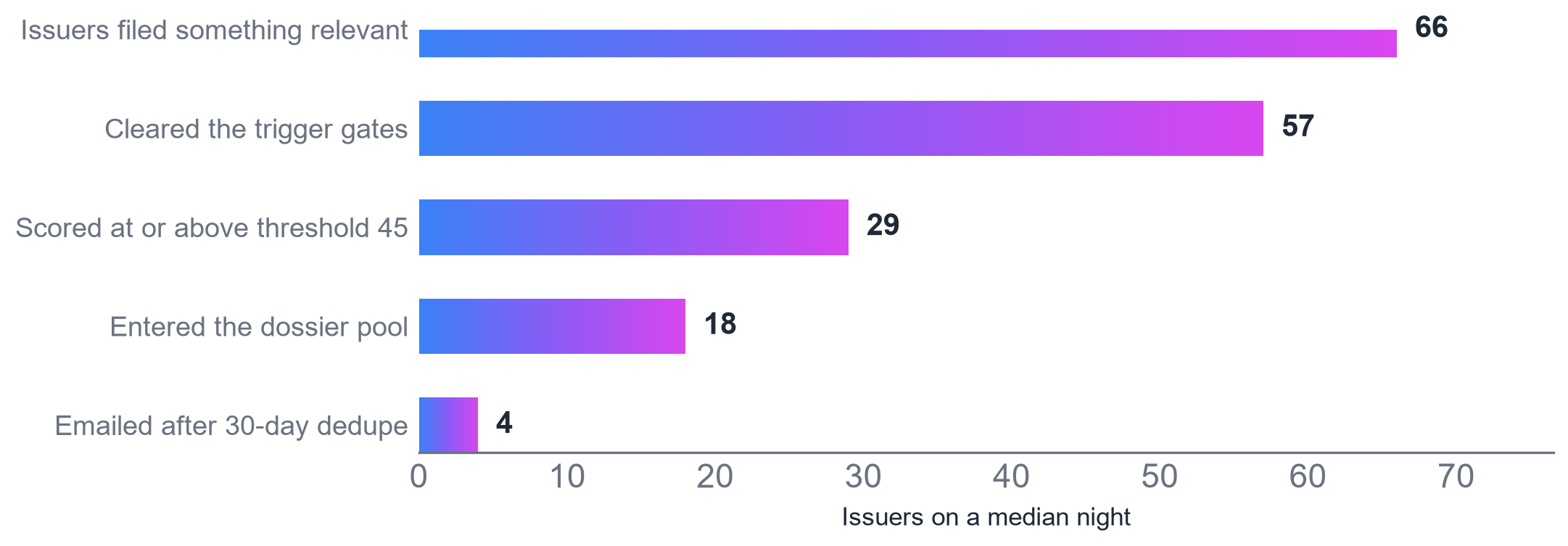
422 simulated nightly runs across the twelve months from 28 July 2025 to 28 July 2026, each scoring the full
674 issuer universe. Point in time throughout: the cutoff on every run is the run date minus
one day, universe membership is re-decided on each simulated date, and only XBRL facts whose
filed date precedes the cutoff are visible. Staleness is judged as of the simulated day
rather than from today. That last detail matters more than it sounds: an earlier draft that
judged staleness from the present reported a catch rate 23 points lower.
Why both figures are floors
No language model ran anywhere in this backtest. Only the deterministic
layer was replayed: runway arithmetic, 8-K item codes, form matching, float math. In
production a text pass adds signals that can only raise a score, never lower it. Both the
catch rate and the lead times are therefore lower bounds rather than estimates. One further
day of lead is given away on every event by the cutoff rule.
Stated limitations, in full
- Precision is a cohort estimate, not a per-name promise. It is measured over threshold crossings with 180 days of history after them, so the newest crossings are excluded, and a base rate for never-flagged issuers is shown beside it. It says nothing about any particular name.
- Survivorship bias. The universe is as of today, so a delisted issuer's raise is invisible to the replay.
- Event detection is imperfect. 1,363 Item 1.01 filings were read and 517 named a financing instrument. Hand-checking a random sample found roughly 85 to 90% precision. Removing that channel entirely moves the full-sample catch count from 573 to 552.
- Coverage gaps. 18 of 390 business days had no published daily index.
- Scope. Equity and equity-linked financings only. Debt papered as a credit or loan agreement is not counted.
- The rubric was not calibrated. Weights were reasoned from financing mechanics, not fitted to any investor's revealed preferences. The full rubric is published.
- Float is a lagging proxy for market cap. It is measured at fiscal Q2 and can be materially stale for an issuer whose price has moved.
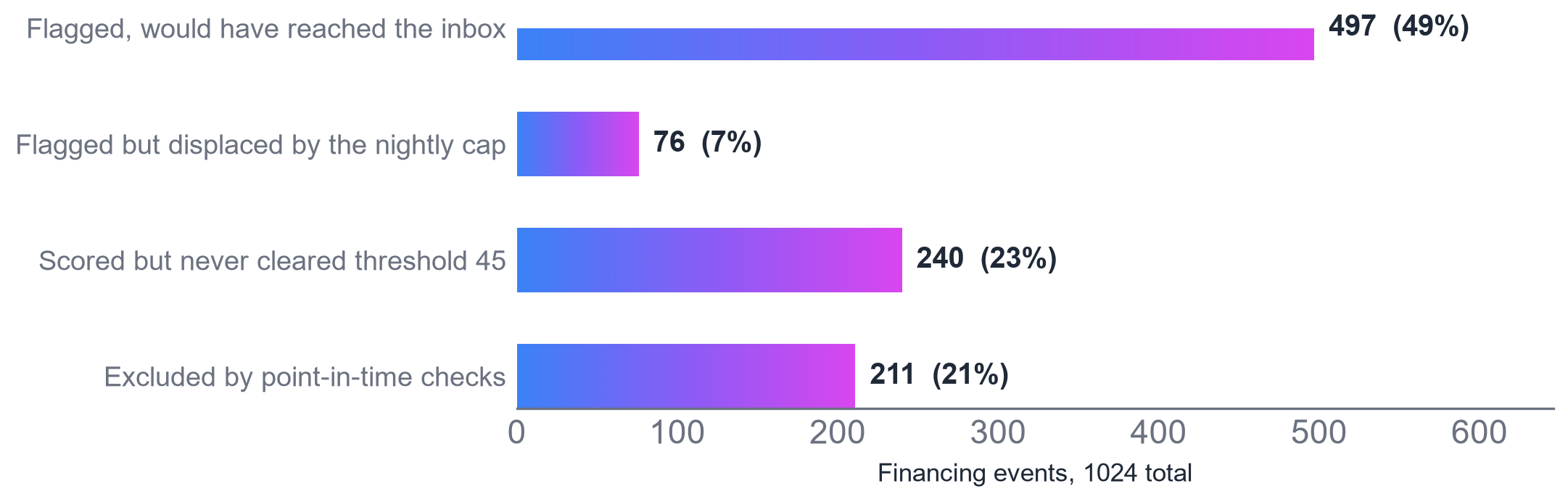
What this establishes is narrow and worth stating plainly: a rubric written from financing
mechanics, with no calibration against anyone's revealed preferences, would have flagged
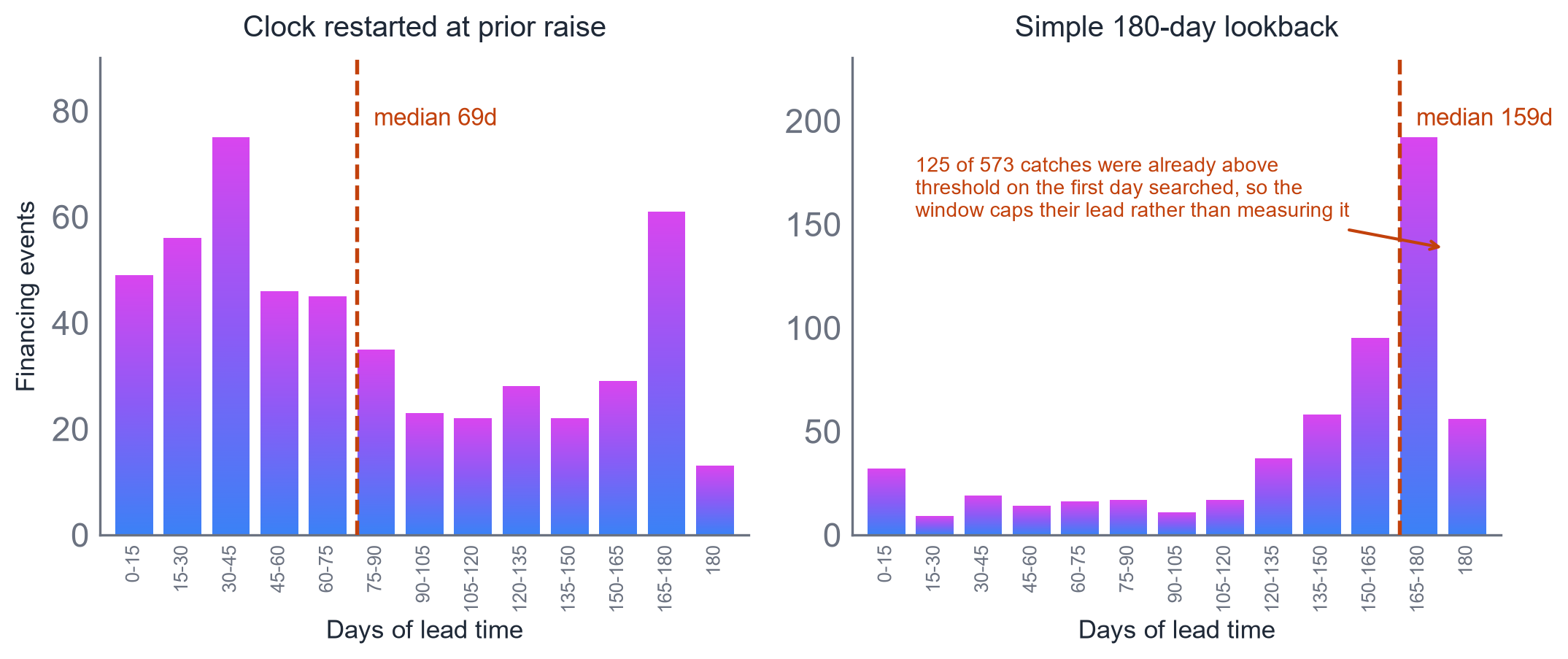
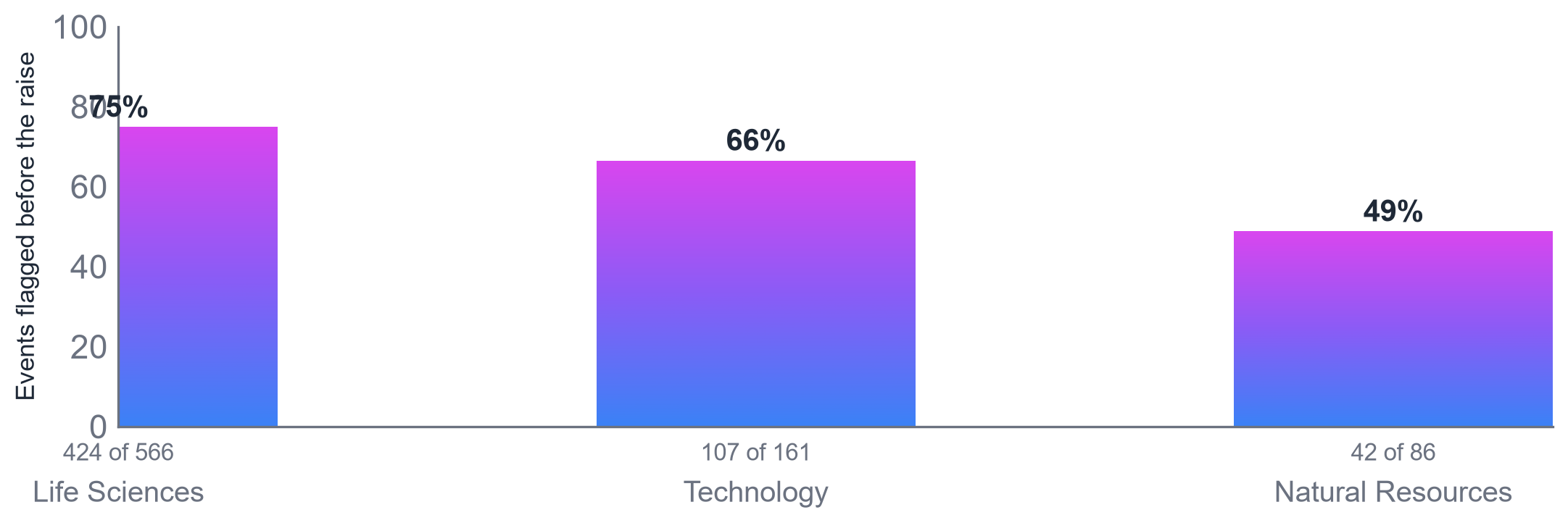
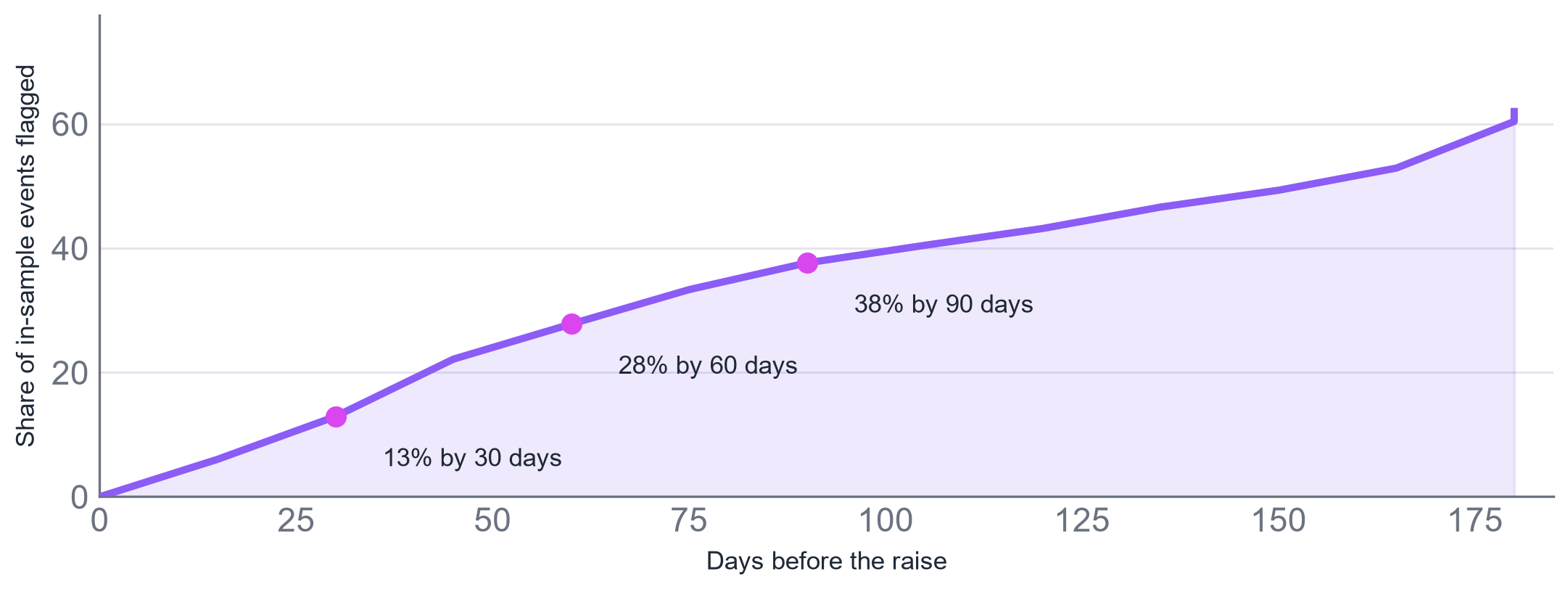
seven in ten subsequent raises at a median of just over two months, using nothing but free
public filings. It does not establish that those are the right names for you. Which signals
matter, and how much, depends on whether you lead equity, write converts, or take down
shelf paper.